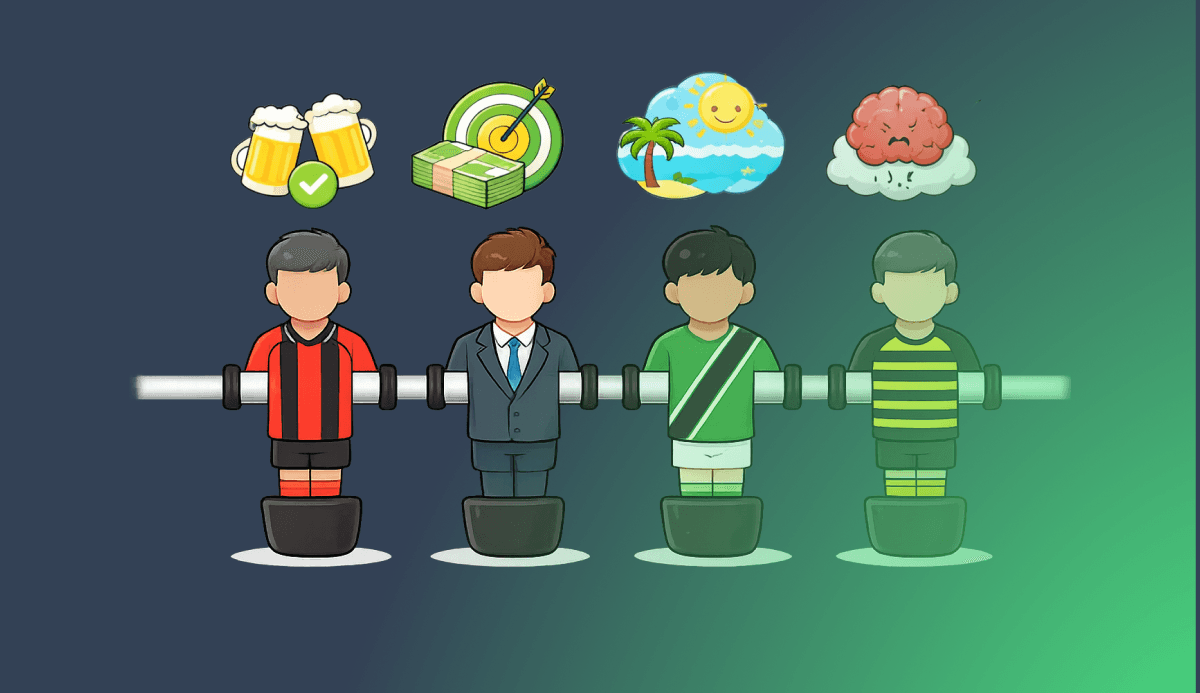
Why Understanding the Types of Gamblers Matters for Responsible Play
Not all gambling is the same. A person who bets occasionally at a social event and a person who gambles daily to escape anxiety are both technically "gamblers," but the psychological and financial risks they face are fundamentally different.
Categorising gambling behaviour helps players self-assess accurately. It also helps family members and friends identify patterns that might otherwise be rationalised as harmless.
The 6 Main Types of Gamblers – A Detailed Breakdown
1. The Social Gambler | Gambling for Fun and Entertainment
Social gamblers make up the majority of the gambling population. They gamble occasionally for entertainment, treat it as a leisure activity, and stop when the pre-agreed money or time runs out.
Key characteristics: gambling is never the primary focus of social events, losses are accepted without emotional distress, and there is no compulsion to continue beyond the planned session. The social gambler has a natural exit point built into every session. Maintaining this behaviour is central to safer gambling principles.
2. The Professional Gambler | Treating Gambling as a Business
Professional gamblers treat gambling as a primary or supplementary income source. They apply research, bankroll management, and discipline to maintain a statistical edge, typically in poker or sports betting rather than casino games with a fixed house edge.
This profile is less common than media portrayal suggests. Genuine professionals operate with strict limits, detailed record-keeping, and a detached emotional relationship to individual results. Volatility is managed rather than chased.
3. The Serious Social Gambler | High Involvement, Low Harm
The serious social gambler gambles frequently and devotes significant time and money to it, but maintains control. Gambling is a primary hobby alongside others. Financial and personal responsibilities are not neglected.
The distinction from a problem gambler lies in control and consequence. The serious social gambler can and does stop when necessary. Losses are budgeted and accepted. This profile requires active monitoring because the high frequency of play increases the exposure to risk escalation over time. Understanding the signs of gambling addiction helps monitor this transition.
4. The Relief and Escape Gambler | Using Gambling to Cope
The relief and escape gambler uses gambling to manage emotional states: stress, depression, boredom, loneliness, or anxiety. Gambling provides temporary relief from negative feelings rather than straightforward entertainment.
This is one of the highest-risk profiles. The gambling is serving a psychological function, which means stopping requires addressing the underlying emotional need as well as the gambling behaviour itself. The psychology of gambling page covers how dopamine and reward mechanisms are particularly powerful for this type of gambler.
5. The Problem Gambler | Losing Control but Not Yet Addicted
Problem gamblers experience episodes of loss of control without meeting the full diagnostic criteria for gambling disorder. They may overspend regularly, chase losses, or lie about their gambling, but can also have extended periods of controlled or absent gambling.
This profile sits at the critical threshold. Without intervention, problem gambling frequently progresses to compulsive gambling. With the right tools and support, many problem gamblers return to controlled play or stop entirely.
6. The Compulsive (Pathological) Gambler | Full Addiction
Compulsive gambling is a recognised behavioural addiction (gambling disorder, DSM-5). The compulsive gambler cannot reliably stop despite negative consequences to finances, relationships, employment, and mental health. Gambling occupies a disproportionate amount of cognitive and emotional energy.
At this stage, self-help tools alone are rarely sufficient. Professional intervention, typically cognitive behavioural therapy (CBT) combined with self-exclusion and peer support, produces the best long-term outcomes. A full guide to immediate and longer-term steps is in how to stop gambling and address problem gambling. If debt has accumulated, explore gambling debt solutions to understand your financial recovery options.
How to Identify Which Type of Gambler You Are – A Self-Assessment Guide
Answer the following questions honestly. Your answers indicate where you currently sit on the spectrum.
Question | Lower Risk | Higher Risk |
|---|---|---|
Do you gamble to a pre-agreed budget? | Yes, always | Sometimes or no |
Do you stop when the money is gone? | Yes | I often try to recover losses |
Do you gamble to escape stress or anxiety? | Rarely | Often or always |
Have you lied about how much you gamble? | No | Yes |
Has gambling caused financial problems? | No | Yes |
Do you feel unable to stop mid-session? | No | Yes, regularly |
Two or more "higher risk" answers across different categories is a signal to review your gambling habits and consider speaking to a support service.
From Awareness to Action: Responsible Gambling Tools for Every Gambler Type
Gambler Type | Recommended Tools |
|---|---|
Social gambler | Session limits, reality checks as good practice |
Professional gambler | Detailed record-keeping, session limits |
Serious social gambler | Deposit limits, monthly spend reviews |
Relief and escape gambler | Self-exclusion, professional counselling |
Problem gambler | Deposit limits, self-exclusion, support helpline |
Compulsive gambler | GamStop registration, CBT, residential treatment if needed |
For guidance on choosing and setting the right tools, the tips for responsible gambling guide covers each tool type with step-by-step setup instructions. Key tools include reality checks and session limits, deposit limits, and time-outs and self-exclusion.
When to Seek Help: Recognising the Shift from Casual to Harmful Gambling
The shift from casual to harmful gambling is rarely dramatic. It typically happens through gradual escalation: slightly longer sessions, slightly larger stakes, slightly more frequent play. The key indicator is not the amount you gamble but the relationship you have with it.
Seek support if gambling is affecting your finances, your ability to meet responsibilities, or your emotional state. You do not need to be at the compulsive stage to benefit from professional help. GamCare offers a free self-assessment tool at gamcare.org.uk that takes under two minutes and gives a realistic picture of your current behaviour.
Gambling support: If gambling is affecting you or someone you know, contact GamCare or call the National Gambling Helpline free, confidential, 24/7.
Conclusion – Know Your Gambling Type, Play Responsibly
The six types of gamblers exist on a continuum from low-risk social play to full addiction. Knowing where you sit on that continuum is not about self-diagnosis. It is about informed self-awareness. The tools and support to stay safe are available at every stage. To gamble responsibly and maintain control, start by understanding your type and using the relevant tools for your profile.