What Is a Gambling Self-Exclusion?
A gambling self-exclusion is a formal, enforceable request to be blocked from gambling at one or more operators for a defined period. Once active, the operator is legally required to refuse access, prevent deposits, and stop sending you promotional material.
Key features of a gambling self-exclusion:
- Blocks login access to registered gambling accounts.
- Prevents deposits and gameplay during the exclusion period.
- Stops marketing emails, SMS, and promotional offers from the operator.
- Covers multiple operators simultaneously when registered via a national scheme such as GamStop (UK).
- Cannot be reversed before the agreed end date.
Self-exclusion is available on all UK Gambling Commission (UKGC)-licensed platforms and is mandatory to offer under UK regulation. For a broader view of how exclusion fits into a recovery plan, see our guide on how to stop gambling and address problem gambling.
How Does Gambling Self-Exclusion Work? Step by Step
Step 1: Choose a Self-Exclusion Scheme
In the UK, GamStop is the national self-exclusion scheme. A single GamStop registration applies across all UKGC-licensed online casinos and betting sites simultaneously. Individual casino self-exclusion only covers that specific operator, so GamStop is the recommended starting point for most players.
Step 2: Complete the Registration Process
Provide your name, date of birth, address, and email address. GamStop may also ask for a list of any additional email addresses or usernames you use on gambling sites. The process is free and takes under ten minutes.
Step 3: Confirmation and Cooling-Off
After submitting your application, you receive a confirmation email. The exclusion typically takes effect within 24 to 48 hours. During this window, you should avoid gambling. If you are concerned about the gap, contact your individual casino accounts and request an immediate time-out while the national exclusion processes.
Step 4: Enforcement and Blocking
Once active, casinos must:
- Refuse login attempts from your account.
- Block any new accounts opened with your personal details.
- Cease all marketing communications.
- Refund any deposits made in error during the exclusion period.
Attempting to open new accounts during self-exclusion breaches the terms and may result in winnings being forfeited.
Self-Exclusion vs Time-Out: What Is the Difference?
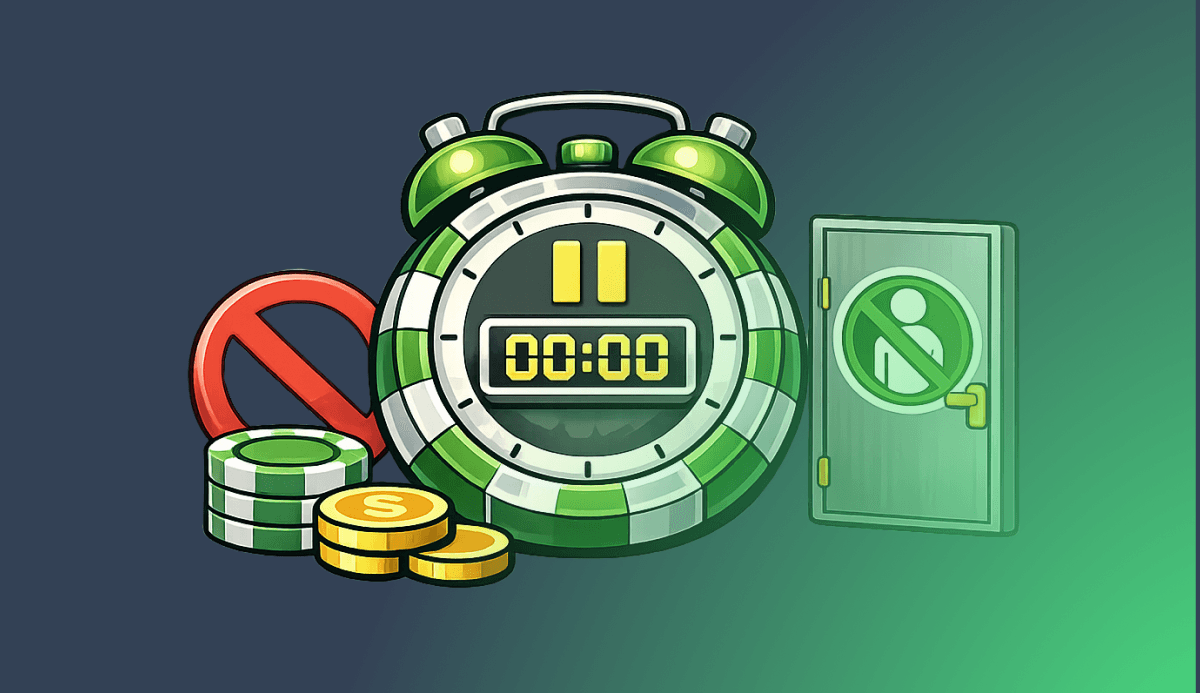
A time-out is a short, voluntary break that temporarily locks your gambling account, while self-exclusion is a longer-term, legally binding ban covering all licensed operators. The core distinction is duration and reversibility.
Feature | Time-Out | Self-Exclusion |
|---|---|---|
Duration | 24 hours to 6 weeks | 6 months to lifetime |
Scope | Usually a single casino | Multi-operator (via GamStop in UK) |
Reversal | Automatic at period end | Requires a formal request after expiry |
Marketing stopped | Yes | Yes |
Legal backing | Operator policy | Statutory licence condition |
Best suited for | Short breaks, early concern | Serious problem gambling or addiction |
For players who want a brief pause without committing to a full exclusion, a time-out is the appropriate starting point. Reality checks and session limits offer an even lighter-touch alternative. Understanding gambling addiction facts can help determine which tool is right for your situation.
Why Should You Use Gambling Self-Exclusion?
Self-exclusion breaks the cycle of problem gambling by removing access before the urge to play becomes an action. It is one of the most effective responsible gambling tools precisely because it requires no willpower at the point of temptation.
Key benefits:
- Financial protection. Prevents impulsive deposits and removes the ability to chase losses.
- Reduced psychological triggers. No casino marketing, no game availability, no notification prompts.
- Recovery support. Creates the time and mental space needed to seek professional help.
- Legal enforceability. Operators face regulatory action if they knowingly allow excluded players to gamble.
Self-exclusion is most effective when combined with blocking software such as BetBlocker (free) or Gamban, which work at the device level and cover unlicensed sites that national schemes cannot reach.
How to Enrol in a Gambling Self-Exclusion Programme
1. Find Your Local Self-Exclusion Scheme
- UK: GamStop — covers all UKGC-licensed operators simultaneously. Register at gamstop.co.uk.
- Australia: BetStop — the national self-exclusion register for all licensed Australian operators. Register at betstop.gov.au.
- Individual casino exclusion: Available in account settings under the responsible gambling section on all UK-licensed sites.
2. Gather the Required Information
You will need your full name, date of birth, home address, email address, and any additional usernames or email addresses linked to gambling accounts.
3. Submit Your Application
Most national schemes are free, fully online, and take 5 to 10 minutes. You may need to verify your identity with a photo ID. Once submitted, do not attempt to access gambling accounts while waiting for confirmation.
4. Set a Reminder for the End of Your Exclusion Period
Self-exclusion does not lift automatically. When your chosen period ends, you must formally request removal, and most programmes then apply a further 24 to 48-hour cooling-off period before access is restored. Set a calendar reminder so the end date does not catch you off guard.
If financial harm has already occurred alongside the gambling problem, our guide to gambling debt solutions covers practical steps for managing debts during and after the exclusion period.
Gambling support: If gambling is affecting you or someone you know, contact GamCare or call the National Gambling Helpline — free, confidential, 24/7.
Conclusion – Take Control with Self-Exclusion and Time-Outs
Self-exclusion is the most powerful tool available to players who have lost control of their gambling. Time-outs serve a different purpose: they are appropriate for players who want a structured break without the longer commitment. Neither replaces professional support, but both create the conditions in which recovery becomes possible.
As part of a comprehensive approach to safer gambling, self-exclusion and time-outs work alongside deposit limits and other player protection measures. For a full overview of the tools, support services, and recovery resources available, gamble responsibly is the starting point.