What Is the Psychology of Gambling?
The psychology of gambling examines how thoughts, feelings, and brain chemistry influence the way people gamble. It explains why gambling feels rewarding even when losses outpace wins, and why some players struggle to stop despite wanting to.
The field bridges three disciplines. Neuroscience identifies which brain regions activate during gambling. Cognitive psychology maps the thinking errors that distort risk perception. Behavioural economics explains how reward structures drive persistence. Together, they reveal that gambling's hold on the brain is partly biological, not simply a matter of weak character.
How Gambling Affects the Brain: The Role of Dopamine and the Reward System
Gambling triggers dopamine release in the nucleus accumbens, the brain's primary reward centre, particularly during the anticipation of a win rather than the win itself. This anticipatory response is stronger for uncertain outcomes than guaranteed ones, which is precisely why gambling is so compelling.
The Dopamine Loop: Anticipation vs. Outcome
The dopamine response in gambling does not follow a simple win/lose pattern. The brain reacts most intensely to uncertainty:
- Anticipation phase: Dopamine surges as you wait for the outcome, whether a spin result or a card reveal.
- Win outcome: Dopamine levels spike, reinforcing the behaviour.
- Loss outcome: Dopamine levels drop, but the anticipation of the next bet triggers another surge cycle.
- Near-misses: Dopamine release is similar to an actual win, maintaining motivation to continue despite no reward received.
This loop means the brain is chemically rewarded for the act of gambling itself, independent of the financial outcome.
Why Near-Misses Trigger the Same Brain Response as Wins
A near-miss occurs when a gambling outcome falls just short of a win, such as two matching symbols and a third just above or below the payline. Neuroimaging studies show that near-misses activate the same reward-related brain regions as actual wins. The brain interprets "almost" as a signal that a win is close, which is factually incorrect in games governed by random number generators but psychologically powerful.
Slot machine design deliberately incorporates near-miss outcomes. Recognising them as a design feature rather than a signal of impending success is one of the more useful pieces of knowledge a player can carry. For players who notice that near-misses drive their urge to continue, reviewing the signs of gambling addiction page is a productive next step.
The Science Behind Gambling Addiction: When Casual Play Becomes Compulsive
Gambling disorder is a recognised behavioural addiction in the DSM-5, characterised by persistent gambling despite negative consequences, failed attempts to stop, and increasing amounts wagered to achieve the same level of excitement. It shares neurological features with substance addiction, including reduced activity in the prefrontal cortex, the brain region responsible for impulse control.
Signs of Gambling Addiction
Common indicators include:
- Lying to family or friends about the frequency or amount of gambling.
- Chasing losses by returning to gambling after losing money.
- Neglecting work, study, or social relationships.
- Gambling with money intended for bills, food, or rent.
- Repeated failed attempts to cut back or stop.
- Feeling restless or irritable when not gambling.
For a comprehensive checklist, see the signs of gambling addiction page.
The Transition from Recreational to Problem Gambling
Problem gambling rarely develops overnight. Researchers describe three phases:
Phase | Characteristics |
|---|---|
Winning phase | Early wins create optimism and reinforce gambling as a source of income |
Losing phase | Losses accumulate; chasing losses begins; gambling frequency increases |
Desperation phase | Borrowing money, lying, legal or financial crises; gambling feels uncontrollable |
Most recreational players remain in the winning phase in terms of emotional experience, gambling for enjoyment within affordable limits. The transition to the losing phase is often gradual and not immediately visible to the player or those around them.
Cognitive Biases in Gambling: How Your Mind Tricks You
Cognitive biases are systematic thinking errors that make gambling appear more predictable or controllable than it actually is. They are not signs of low intelligence. They are universal features of how the human brain processes probability.
The Illusion of Control
The illusion of control leads players to believe their behaviour influences random outcomes. Examples include choosing slot machines that "feel lucky," throwing dice in a specific way, or pressing the spin button at a particular moment. None of these actions affect a random number generator. Recognising this bias reduces the emotional pull of ritualised gambling behaviour.
Gambler's Fallacy Explained
The gambler's fallacy is the belief that past outcomes affect future independent events. Common examples:
- "Red has come up five times on the roulette wheel, so black is overdue."
- "This slot hasn't paid out in a while, so a win is coming."
- "I've been losing all session, so I'm due a win soon."
Each spin, hand, and roll is statistically independent of all prior outcomes. Prior results do not alter future probabilities.
Loss-Chasing Behaviour
Chasing losses occurs when a player increases their stakes or extends their session to recover what they have already lost. It is driven by loss aversion, the psychological principle that losses feel roughly twice as painful as equivalent gains feel pleasurable. This asymmetry makes recovering a loss feel urgent in a way that winning does not.
Chasing losses is the single most common escalation pattern in problem gambling. The guide to how to stop gambling covers practical steps for breaking this cycle.
The Impact of Variable Rewards on Gambling Behaviour
Variable ratio reinforcement, where rewards are delivered after an unpredictable number of responses, is the most powerful behavioural conditioning schedule known. It produces behaviour that is highly resistant to extinction, meaning players persist even through long losing runs.
Why Slot Machines Are Designed to Be Addictive
Slot machines apply variable ratio reinforcement through several design mechanisms:
- Random reward schedules: No fixed number of spins produces a win.
- Near-miss programming: Outcomes are weighted to produce close-but-not-quite results.
- Fast spin cycles: Rapid play reduces time for reflection between bets.
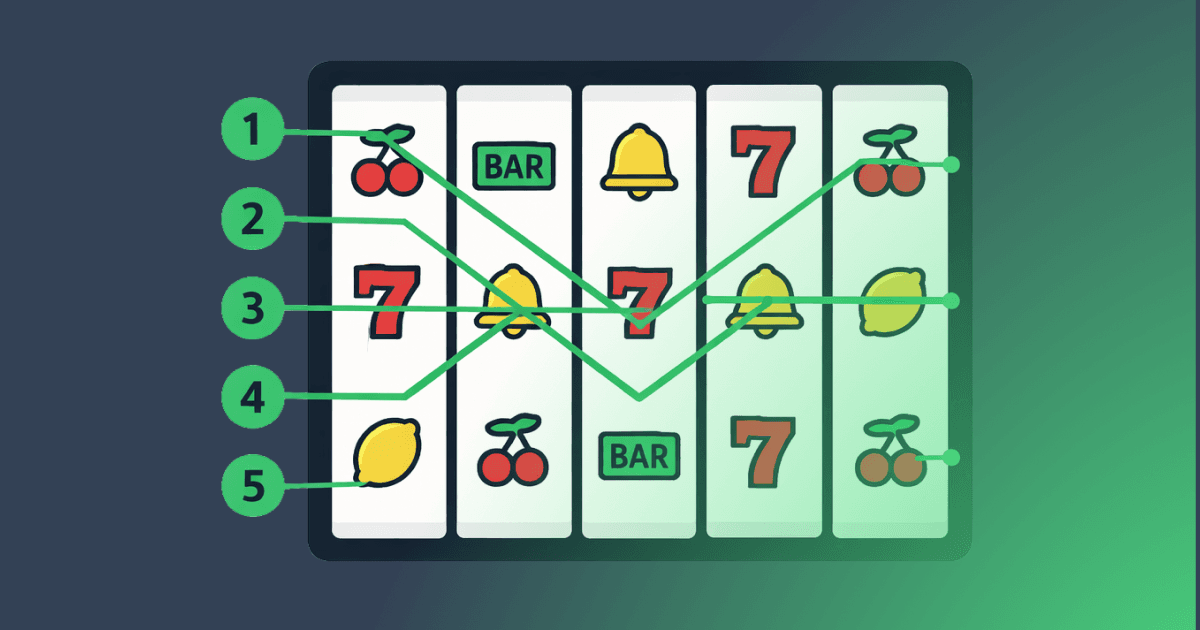
- Multiline bets: Players can win on some lines while losing overall, creating a near-miss experience on multiple axes simultaneously.
- Audiovisual feedback: Wins trigger celebratory sounds and animations regardless of whether the win exceeds the stake.
Fixed vs. Variable Reward Schedules
Reward Schedule | Predictability | Effect on Behaviour |
|---|---|---|
Fixed ratio | High (every Nth response) | Steady behaviour, pauses after reward |
Fixed interval | Moderate (every set time period) | Behaviour increases near reward time |
Variable ratio | None | Continuous, highly persistent behaviour |
Variable ratio schedules produce the most gambling-like persistence. This is why they are the foundation of both modern slot design and social media engagement mechanics.
Understanding Responsible Gambling: Using Psychology to Stay in Control
Responsible gambling uses psychological self-awareness and pre-commitment tools to counter the brain's natural reward-seeking tendencies. Knowing how the mechanisms work gives you a practical advantage.
Practical Tips for Responsible Gambling
Applying knowledge of gambling psychology to your own behaviour:
- Set a budget before you play and treat it as entertainment spend, not recoverable income.
- Recognise near-misses for what they are: losing outcomes, not signals of impending wins.
- Notice chasing-loss thoughts ("I just need one more spin to get back") and treat them as a cue to stop.
- Take timed breaks to disrupt the dopamine loop before it accelerates.
- Never gamble under the influence of alcohol or when emotionally distressed.
For a structured set of evidence-based guidelines, the tips for responsible gambling guide provides a practical framework.
Setting Deposit Limits and Time-Outs
Pre-commitment tools work by removing in-the-moment decision-making. A deposit limit set before a session cannot be overridden during one. A time-out activated in a calm moment prevents access during a moment of craving. Both tools leverage the psychological gap between the reflective self (who sets the limit) and the impulsive self (who would exceed it). They are particularly effective because they require no willpower at the point of temptation. Learn more about setting deposit limits, using time-outs and self-exclusion, and implementing reality checks and session limits.
Gambling support: If gambling is affecting you or someone you know, contact GamCare or call the National Gambling Helpline — free, confidential, 24/7.
Conclusion: Understanding Your Mind to Gamble Responsibly
Three insights from gambling psychology are worth carrying with you. First, gambling activates the dopamine system through anticipation and variable rewards, not just wins. Second, cognitive biases including the gambler's fallacy, the illusion of control, and loss aversion systematically distort risk perception. Third, pre-commitment tools and self-awareness can break the cycle before it becomes harmful.
If you want to explore the support available, the responsible gambling hub covers all available tools and services. For immediate help, responsible gambling organisations lists free services available 24/7. If debt has accumulated, explore gambling debt solutions to understand your financial recovery options.