What is RTP?
Let's start with the basics. RTP is an acronym for Return to Player. A standardized term that indicate how much a gambling game theoretically pays back over millions of spins. It’s always quoted in percentages. For example: 96.5% RTP
RTP Explained: The Core Concept
So, what does "Return to Player" actually mean? In essence, the RTP is a theoretical percentage that indicates the amount of money a slot machine is programmed to pay back to players over an extended period. Think millions and millions of spins.
RTP is a Long-Term Theoretical Percentage
This is the most critical point to grasp. The RTP is not a prediction for your next 10, 100, or even 1,000 spins. It is a statistical average over a virtually infinite number of game rounds.
Imagine flipping a coin. The probability of it landing on heads is 50%. If you flip it ten times, you might get seven heads and three tails. That's a 70% outcome, not 50%. But if you flip that coin a million times, the results will get incredibly close to a perfect 50/50 split. RTP works in the exact same way. A slot with a 96% RTP doesn't guarantee you'll get $96 back from a $100 wager tonight. It means that over its entire lifetime, across all players, the game is designed to return $96 for every $100 wagered. Your individual session can be wildly above or below this average, a phenomenon known as variance.
The Other Side of the Coin: What is the House Edge?
If the RTP is the percentage returned to players, then the House Edge is what remains for the casino and the game provider. It's simply the inverse of the RTP.
If a slot has an RTP of 96%, the house edge is 4%. If a game has a very high RTP of 98%, the house edge is only 2%. This edge is how online casinos and software developers remain profitable businesses. It's not a trick or a scam; it's the fundamental business model. Understanding this helps you see gambling not as a way to make money, but as a form of entertainment with a built-in cost. A lower house edge simply means that the cost is, theoretically, lower.
How is RTP Calculated?
The calculation itself is straightforward. Game developers run their slots through simulations of hundreds of millions of spins in a process called cycle testing. They tally the total amount of money wagered and the total amount paid out in wins. The RTP is the result of this calculation.
A Simplified Calculation Example
Let's make it concrete. Suppose a new slot game is being tested. During its simulation:
- Total amount wagered by all virtual players: $1,000,000,000
- Total amount paid out in wins: $960,000,000
The RTP is calculated as (Total Payout / Total Wager) * 100. ($960,000,000 / $1,000,000,000) * 100 = 96%
So, this slot would be released with a 96% RTP. This means for every $100 fed into the game, it is expected to return $96 over its lifetime. Remember, this is a simplified model. The actual process involves rigorous testing and certification by independent agencies like eCOGRA or iTech Labs to ensure the game is fair and the stated RTP is accurate.
Why Should You Care About RTP?
You might be wondering, "If it's just a long-term average, why does it matter to me?" The value of understanding RTP lies in the power to make informed decisions and manage your bankroll more effectively.
Making Informed Game Choices
Think of it like shopping. If you have two nearly identical products but one offers better long-term value, which would you choose? RTP allows you to apply the same logic to slots. Faced with two similar-themed games, choosing the one with a 96.5% RTP over one with a 94% RTP is, theoretically, the better financial decision over time. It’s about seeking out the best potential value for your entertainment dollar. This is precisely why we built our Slots RTP Checker, to put this power directly in your hands.
RTP as a Tool for Bankroll Management
While no metric can prevent losses, choosing games with a higher RTP can, in theory, help your bankroll last longer. A game that returns more money to players on average will, statistically, deplete your funds at a slower rate than a game with a lower RTP. This isn't a guarantee for a single session, but it's a sound strategic approach if your goal is to extend your playing time and maximise your entertainment.
RTP in the Real World: Introducing FindMyRTP.com
Knowing about RTP is one thing; finding accurate, comparable data is another. This is where the real-world application comes into play, and where our tool changes the game.
Finding the Best RTP Slots
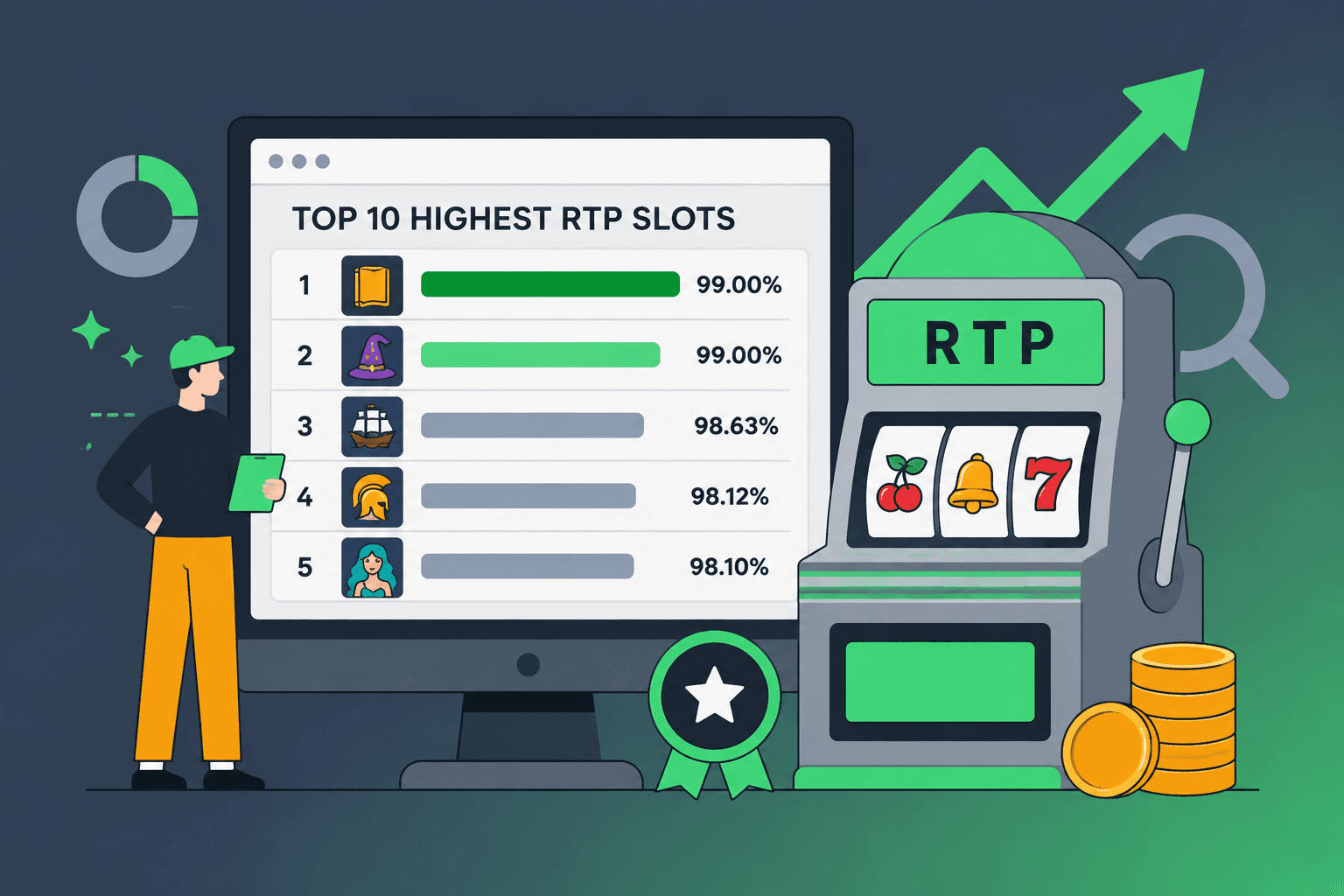
Manually checking the "info" section of hundreds of slots is a tedious task. We've done the heavy lifting for you. FindMyRTP tracks and analyses RTP data directly from game providers and casinos, compiling it into an easy-to-use database. You can quickly filter and search to see which new slot games and classic titles offer the highest return percentages, saving you time and ensuring you have the most current information.
Comparing RTP Across Casinos and Providers
Here’s an insider detail many players miss: the same slot game can have different RTPs at different online casinos. A provider such as NetEnt or Pragmatic Play may release a slot with several RTP configurations (for example 94%, 96%, or 98%). The casino operator then chooses which version of the game to run on their platform.
This means a slot offering 96% RTP at one casino might only return 94% at another. Our platform tracks these differences, helping you identify not only the best games to play, but also the casinos offering the most favorable RTP versions.
Furthermore, by comparing games across different studios, you can start to recognize patterns in the types of slots developers produce. While providers typically offer several RTP variants for each game, their portfolios often show consistent approaches to mechanics, volatility, and gameplay design. If you're interested in learning more about the companies behind these games, you can explore our slot providers page, where we break down the major studios and the types of experiences they create.
Other Key Factors to Notice
RTP is a vital piece of the puzzle, but it's not the only one. To have a complete picture of what to expect from a slot, you need to understand its two closest cousins: volatility and RNG.
The Role of Volatility (or Variance)
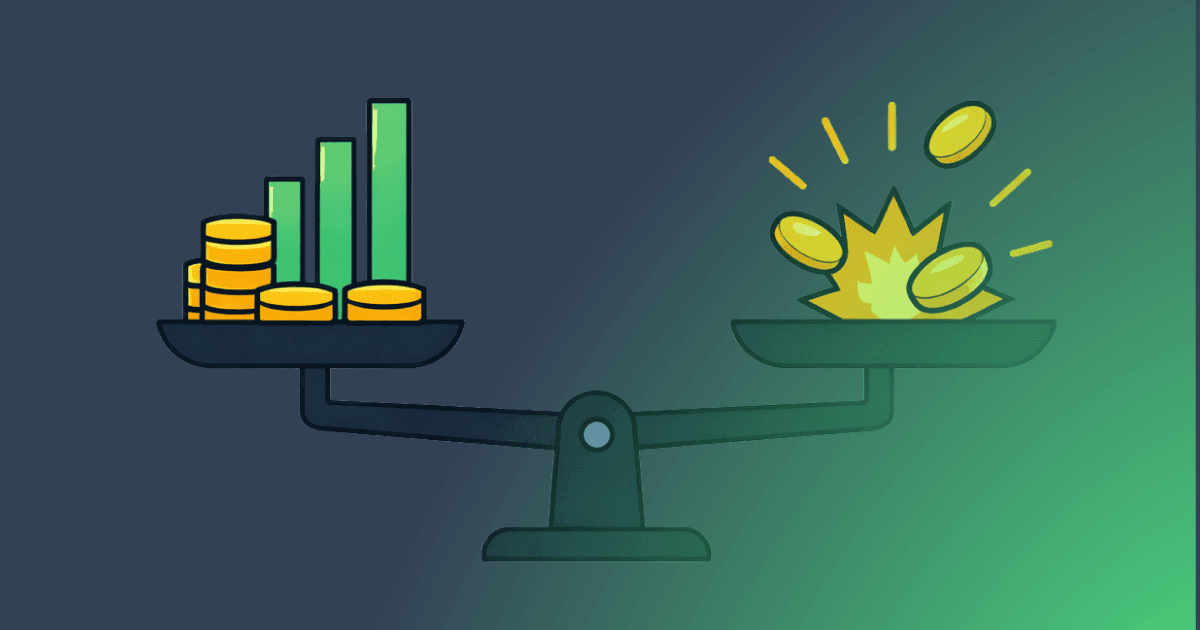
If RTP tells you how much a slot pays back over time, volatility tells you how often and in what size it tends to pay out. The two concepts are independent but deeply interconnected in shaping your experience.
- Low Volatility Slots: These games pay out smaller wins more frequently. They are excellent for players who prefer a steady session where their bankroll doesn't fluctuate wildly. They help extend playtime but are less likely to produce life-changing jackpots.
- High Volatility Slots: These are the opposite. They might have long dry spells with no significant wins, but when they do pay, the wins can be massive. These slots are for players with larger bankrolls and the patience to chase big bonuses and jackpots.
You can find slots tailored to your risk preference by exploring our curated lists of low volatility slots and high volatility slots. A high RTP is great, but if you can't handle the rollercoaster of a high-volatility game, you won't enjoy the experience.
The Random Nature of Random Number Generators (RNG)
At the heart of every digital slot is a Random Number Generator (RNG). This is a complex algorithm that ensures every spin is completely random and independent of the spins that came before and after it. The RNG is running continuously, generating thousands of number sequences per second. The moment you press "spin," it locks in the outcome.
This is why RTP is a long-term metric. The RNG ensures that short-term results are close to completely unpredictable and chaotic. There are no hot or cold streaks programmed into the machine, and no amount of analysis can predict the next outcome. The certified RNG guarantees the game is fair, while the RTP describes its long-term mathematical behavior.
Knowledge is Power
Navigating the world of online slots doesn't have to be a blindfolded spin. While the outcome of any single session is always in the hands of fate, understanding key concepts like RTP and volatility gives you a map in a previously uncharted territory. RTP is your guide to the theoretical value of a game, helping you select slots that are programmed to return more to the player community over time.
By combining this knowledge with an understanding of your own preferences for volatility, you can curate a gameplay experience that you genuinely enjoy. This informed approach is the core of responsible and strategic play. And with resources like FindMyRTP.com, you have a powerful tool to easily access the data you need to make these smart choices. Your time and money are valuable; use knowledge to make the most of them.